A Feast on Film: How Indian Cinema Uses Food to Tell the Stories No Dialogue Can
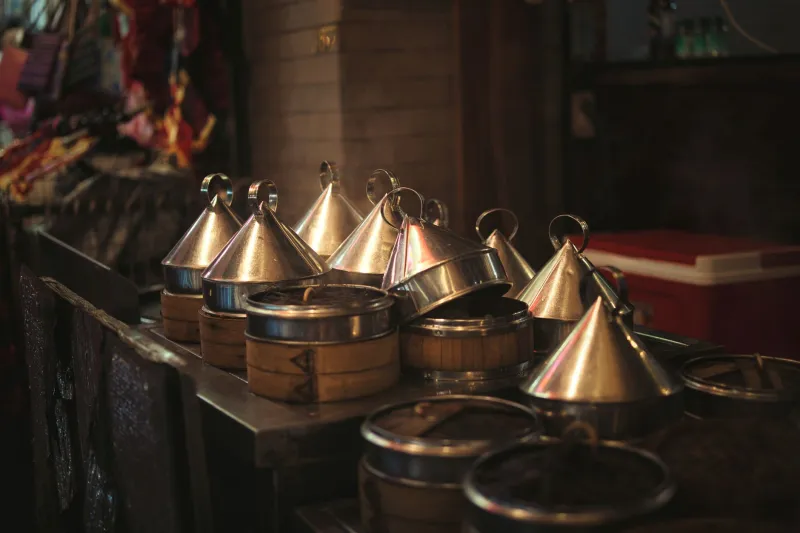
There's a scene in Ritesh Batra's The Lunchbox (2013) where Irrfan Khan's lonely, recently widowed bureaucrat opens a tiffin tin and pauses. He doesn't say anything. He just breathes in. And somehow, in that single moment, you understand everything about his loneliness, his surprise at being cared for, and the strange intimacy of eating food that someone made specifically for you. No voiceover. No expository dialogue. Just a man, a tin, and the smell of something cooked with intention.
That scene is a masterclass in what South Asian cinema has been doing with food for decades — using it as a narrative language that operates completely independently of spoken words.
The Lunchbox and the Grammar of Culinary Storytelling
It would be impossible to write about food in Indian cinema without starting here. The Lunchbox is probably the film that introduced the concept of Indian culinary storytelling to the widest American audience, earning Oscar buzz and landing on countless best-of lists when it made its US run. Its premise is deceptively simple: a misdirected lunchbox in Mumbai's legendary dabbawala delivery system creates an unlikely correspondence between a housewife and a stranger.
But the food in the film isn't just a plot device. It's the primary emotional language. Every dish Nimrat Kaur's character cooks communicates something her character can't say out loud — desire, creativity, loneliness, hope. When Irrfan Khan's character writes back with specific feedback on the spicing, it's the most intimate thing he's done in years. The food creates permission for emotional honesty that social convention would otherwise block.
For American viewers, the film also served as an inadvertent introduction to the concept of the tiffin system itself — the extraordinary logistical network that delivers home-cooked meals to hundreds of thousands of Mumbai office workers every day. Food as infrastructure. Food as social fabric. It's a concept that doesn't map neatly onto American lunch culture, and that foreignness is part of what makes it so compelling.
Regional Cuisine as Cultural GPS
Here's where things get genuinely exciting for anyone interested in the breadth of South Asian cinema. India isn't one food culture — it's dozens, each as distinct as the difference between Cajun cooking and New England clam chowder, and the best Indian films and web series treat those distinctions with real seriousness.
Take Chettinad cuisine, which originates from a specific community in Tamil Nadu and is characterized by its aggressive use of freshly ground spices, sun-dried meats, and techniques that have been largely unchanged for generations. Several Tamil-language films and streaming series have used Chettinad cooking as a way to explore questions of cultural preservation — what happens to a cuisine when the community that created it disperses? When the grandmothers who hold the knowledge are gone? These aren't abstract questions. They're the same questions American immigrant communities ask about their own food traditions.
Hyderabadi cuisine — and specifically the biryani that has become something of a cultural flashpoint in contemporary India — shows up repeatedly in Telugu and Hindi films as shorthand for a whole constellation of meanings: Mughal history, the particular culture of a city that exists at the crossroads of multiple traditions, and the way food can be both deeply local and universally beloved. When a Hyderabadi film character makes or orders biryani, there's always more being said than just "I'm hungry."
Bengali food narratives carry their own distinct emotional register. Bengali cinema has a long tradition of associating specific dishes — mishti doi, macher jhol, sandesh — with memory, grief, and homecoming in ways that feel almost Proustian. A bowl of fish curry in a Bengali film is frequently a portal to childhood, to a mother who is no longer living, to a version of home that exists only in the past.
Why These Stories Land with American Audiences
Food-centric storytelling resonates universally for a pretty simple reason: everyone eats, and almost everyone has a food memory that is actually a memory about something else entirely. The smell of a grandmother's kitchen. The first meal after a loss. The dish that tastes like a place you can't go back to.
South Asian cinema taps into this universal emotional frequency while simultaneously delivering something genuinely specific and unfamiliar. American viewers watching a Tamil film about a family's relationship to their ancestral recipes aren't just learning that Chettinad pepper chicken exists — they're absorbing information about family hierarchy, gender roles in domestic spaces, the economics of spice trading, and the particular pride of a community that knows its food is extraordinary. It's cultural education that doesn't feel like homework because it arrives wrapped in story and flavor.
This is something that food scholars and anthropologists have noted for years: cuisine is one of the most efficient carriers of cultural information that exists. Films that take food seriously are, almost by definition, films that take culture seriously.
From Art House to Streaming: The Next Wave
The tradition that The Lunchbox represents is very much alive and evolving. Several recent Indian web series on platforms available in the US — including productions on Netflix India and Amazon Prime Video — have made food central to their storytelling in sophisticated ways. Shows exploring the street food cultures of specific Indian cities have found audiences far beyond the South Asian diaspora, partly because they function simultaneously as travelogue, social documentary, and pure sensory pleasure.
There's also a growing trend of Indian films that take a more explicitly political approach to food — examining caste and access, the way certain cuisines have been historically devalued or erased, and the contemporary movement to reclaim and celebrate regional food traditions that were sidelined during decades when "Indian food" in the global imagination meant a fairly narrow set of North Indian dishes.
For American audiences, these films offer something increasingly rare: a perspective on food that treats it as genuinely consequential. Not as lifestyle content or Instagram backdrop, but as a living record of who a community is and where it came from.
The Plate as the Story
The best food films from South Asia share a quality with the best food films anywhere — they make you hungry in ways that have nothing to do with calories. You're hungry for the place, the family, the history behind the dish. You want to understand not just what something tastes like but why it matters.
That's the real gift these films offer American viewers willing to seek them out. Every carefully filmed plate of rasam or slow-cooked nihari or hand-rolled modak is an invitation to look more closely at a culture that is vast, varied, and endlessly worth knowing.
Pull up The Lunchbox tonight if you haven't seen it. Then follow the thread wherever it takes you. The table is long, and there's plenty of room.