Spice, Stories, and Seven Million Followers: The Indian Home Cooks Taking Over Your For You Page
The Algorithm Didn't See Them Coming
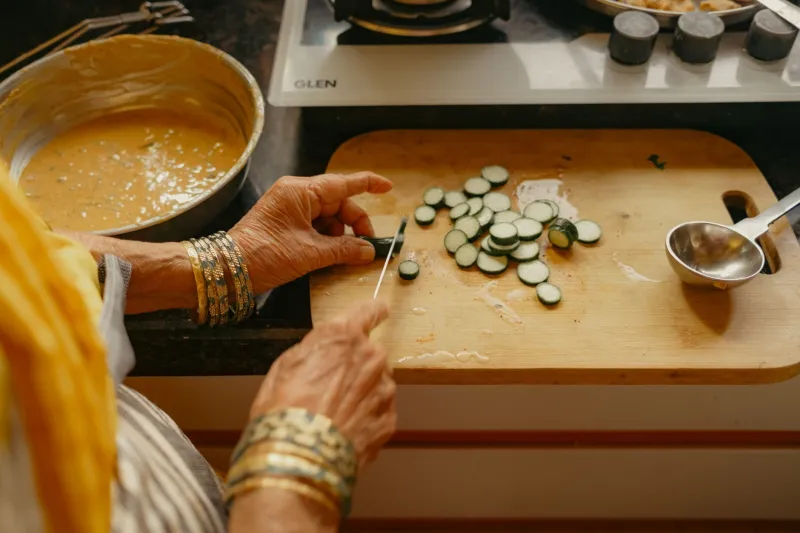
Somewhere in a modest kitchen in Hyderabad, a seventy-three-year-old woman in a cotton sari is narrating the steps to make tamarind rasam in a voice that sounds exactly like your own grandmother — assuming your grandmother grew up in Andhra Pradesh. There's no ring light. The counter is slightly cluttered. The camera angle is a little crooked. And the video has four million views.
This is the moment Indian home cooking has been quietly building toward for years. No fancy plating, no chef's whites, no dramatic slow-motion pour of clarified butter. Just real people in real kitchens making the food that has sustained families for generations — and an American audience that cannot get enough of it.
Social media, particularly TikTok and Instagram Reels, has handed a microphone to a demographic that the food industry largely ignored: the home cook. And in South Asian communities, that home cook is very often an auntie, a nani, a paati, or a dadi who has been perfecting her dal makhani for forty years and has absolutely zero interest in telling you about her "brand partnerships."
Why Authenticity Hits Different
American food culture has spent years chasing authenticity, but it mostly found it in expensive restaurants with dramatic origin stories on the menu. What TikTok did was blow that whole system open. Suddenly the most compelling food content wasn't coming from Michelin-starred kitchens — it was coming from someone's mom explaining why you absolutely cannot rush the tempering of mustard seeds.
There's a rawness to these videos that feels almost radical by today's production standards. Bad lighting. Regional dialects with no subtitles. Measurements given in handfuls and "just enough." And audiences — including a lot of non-South Asian Americans — are responding to it like they've been starved for exactly this kind of realness.
Part of what makes these creators so compelling is that they aren't performing for the camera. They're just cooking. The commentary is incidental, often directed at family members off-screen. The recipes come with context that no cookbook ever included: this is what my mother made the night before my wedding; we only cook this during the monsoon; you add this spice when someone is sick. That kind of storytelling doesn't have a price tag, and it can't be faked.
The Diaspora Watches, and Then Calls Home
For Indian Americans, these videos are doing something emotionally complicated and deeply meaningful at the same time. A second-generation kid who grew up embarrassed to bring tiffin to school lunch is now watching a grandmother in Tamil Nadu make the exact same dish — and feeling something shift.
The diaspora has always had a fraught relationship with the food of their heritage. Too pungent for the cafeteria. Too hard to explain to friends. Too associated with the "old country" when all you wanted was to fit in. But watching these home cooks command millions of followers has a quietly validating effect. The food you grew up apologizing for is now the food everyone wants to learn how to make.
Many second and third-generation South Asian Americans have talked openly online about how these videos prompted them to call their grandparents and ask for recipes they'd never thought to write down. There's a preservation happening here that goes beyond cuisine — it's cultural memory being archived one TikTok at a time.
Changing What Americans Actually Cook
The impact isn't staying within the diaspora, though. That's what makes this moment genuinely significant. American home cooks — the kind who previously thought Indian food was something you ordered on Seamless — are now buying asafoetida and curry leaves and dried red chilies and attempting dal at home for the first time.
Search interest in Indian cooking techniques has spiked noticeably over the past few years, and grocery chains across the US are quietly expanding their Indian pantry sections to meet demand. Whole Foods locations in cities with large South Asian populations have reported growing sales in specialty spices that were previously niche items. Some of that is driven by restaurants and media, sure. But a significant chunk is driven by people who watched a video of someone's grandmother making a one-pot dish and thought: I can do that.
What these creators are accomplishing that restaurants never quite managed is demystification. Indian cuisine has long been perceived by non-South Asian Americans as intimidating — too many spices, too many steps, too easy to get wrong. But watching a seventy-year-old woman in a small kitchen make it look completely manageable, while casually explaining exactly why each ingredient matters, removes that barrier in a way that no restaurant menu ever could.
No Filter, No Formula
What's striking about the most successful of these creators is how little they've changed to achieve their reach. They haven't adopted the pacing of mainstream food content. They haven't anglicized their recipes or swapped ghee for olive oil to seem more approachable. They cook the way they cook, they explain it the way they explain it, and the audience comes to them.
That's a meaningful inversion of how the food media industry has traditionally worked, where South Asian cuisines were often filtered through a Western editorial lens — simplified, de-spiced, reframed for a presumed audience that needed things toned down. These creators skipped that entire negotiation. The algorithm flattened the gatekeeping, and it turned out the audience was ready for the real thing all along.
Some of these home cooks have parlayed their followings into cookbook deals, brand collaborations with Indian spice companies, and even cooking class series. But many of them are still just cooking. Still in the same kitchen. Still measuring by feel. Still talking to someone off-camera who may or may not be paying attention.
The Table Is Bigger Now
There's something PrabhuGhar has always believed: South Asian culture doesn't need to be translated to be loved. It needs to be seen. And what these home cooks have done, with nothing more than a phone propped against a spice rack, is make that case more powerfully than any marketing campaign ever could.
The grandmother's kitchen has always been the center of something — family, memory, identity, love. Now it turns out it was also the center of something the whole world was hungry for. They just needed a way to pull up a chair.
The food was always this good. Now everyone finally knows it.


