Checkout Desk Cinema: How Public Libraries Became America's Most Democratic Bollywood Venue
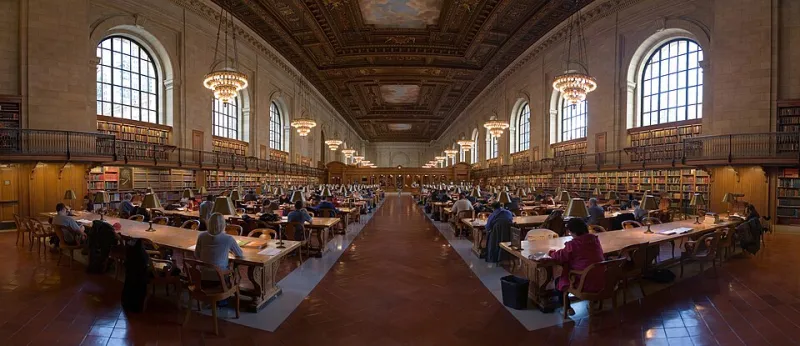
Photo: Diliff, CC BY 2.5, via Wikimedia Commons
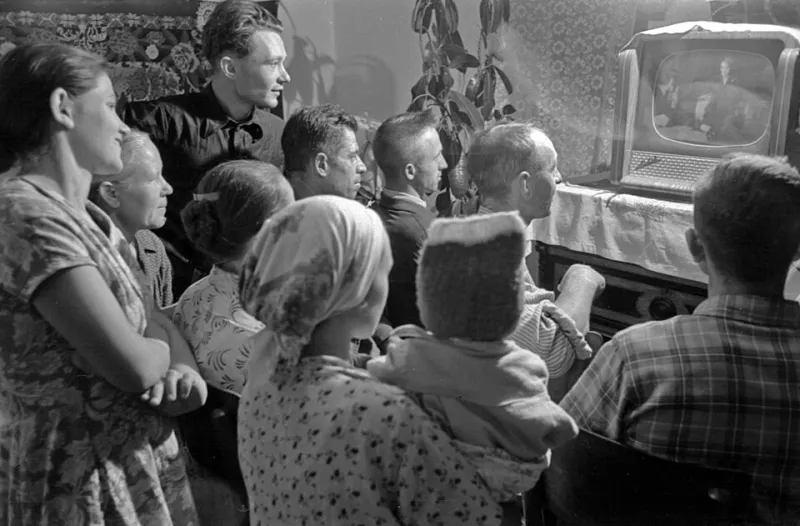
The room seats about sixty, and there are seventy people in it. A librarian is dragging in the last of the stackable chairs. Someone's grandmother has claimed the seat closest to the screen. A teenager in a hoodie is explaining, with visible effort, why the hero's mother is about to do something dramatic.
The film starts eleven minutes late because the HDMI cable needed replacing. Nobody minds. This is, by several accounts, a typical Tuesday.
Where the Idea Came From
Public libraries have screened movies for as long as they've had meeting rooms. What's newer is a deliberate turn toward Indian cinema — not as a one-off heritage event in October, but as part of a regular programming calendar. It tends to start with a librarian who notices something in the circulation data, or a patron who asks a simple question: could we do a Bollywood night?
The answer, increasingly, is yes. Library systems in the New York, Bay Area, Chicago, Dallas, and D.C. metros have run Indian film series in recent years, often co-hosted with a local cultural association, a university South Asian students' group, or a volunteer who happens to own an excellent projector.
How the Titles Get Chosen
The selection process is where these series live or die, and it looks different everywhere.
Some programmers lean on the canon — the titles that a mixed audience has at least heard of, the ones with enough name recognition to fill a room. Others deliberately go sideways, pairing a crowd-pleaser with something regional, or building a series around a theme: rain, weddings, trains, mothers.
What almost nobody does is pick blind off a popularity chart. Librarians tend to think in terms of an arc — a gentle entry point in week one, something more challenging by week four — and they pay close attention to runtime, which is a real constraint when the room has to be cleared by nine.
And then there's the licensing question, which is the least romantic part of the job. Public screenings require public performance rights, and Indian films are unevenly represented in the licensing catalogs that most American libraries rely on. Some series work through institutional subscriptions and licensed streaming platforms; others rely on distributors, film festivals, or permission secured directly. It's the reason a librarian will sometimes describe a beloved title as "we couldn't get the rights" with genuine grief.
The Subtitle Wars, Library Edition
Every organizer has a story about subtitles. The projector settings are wrong. The subtitles are burned in and the aspect ratio is off. The subtitles are fine but too small for the back row. The subtitles are fine, and someone in row three is still narrating the plot aloud to a companion, which is either charming or a federal offense depending on where you sit.
Experienced programmers have adapted. They print a one-page synopsis with character names and hand it out at the door — a cheat sheet that lets a newcomer track who's who without missing the visuals. They test the subtitle rendering before the room fills. They've learned that a five-minute introduction, delivered by someone who actually knows the film, buys an enormous amount of goodwill.
Intermission Is a Feature
Bollywood's built-in interval is, by consensus, the single best thing about screening Indian films in a library. It's a natural break for the crowd to talk, and it's when the chai appears.
Several series have leaned into this hard. The intermission becomes the social hour: snacks brought by volunteers, a table of samosas, a sign-up sheet for the next screening. For older patrons who grew up with interval culture, it's the part that feels most familiar. For first-timers, it's the part that makes the whole thing feel less like a lecture.
What Algorithms Can't Do
Streaming has made an extraordinary range of Indian cinema available in the US. It has also made it quiet. A recommendation engine will hand you a title, but it won't tell you why the woman next to you has seen it fourteen times, or which scene her mother quotes at weddings.
That's the gap these screenings fill. A library meeting room provides something the algorithm structurally cannot: a room full of people who disagree about the ending.
There's also the audience-mixing effect. These events draw desi families who want their kids to see a classic on a big screen, but they also draw retirees with no South Asian connection who came for the air conditioning and stayed for the plot. That accidental crossover is where a lot of the real cultural translation happens — and it happens sideways, in the snack line, rather than from a podium.
If You Want One in Your Town
The playbook, according to people who've run these:
- Ask the library, not the internet. Most systems have a programming request form and a staff member whose job is literally community programming.
- Bring a partner. A cultural association or student group can supply volunteers, audience, and credibility.
- Solve subtitles early. Test the file on the actual projector, not a laptop.
- Plan for the interval. It is the whole point.
- Start small and repeat. A monthly series with twenty regulars outlasts a single sold-out gala.
The chairs get stacked at the end of the night. Someone always stays behind to argue about the film. The librarian locks up a little later than planned, which is, by most measures, a success.