No Studio, No Problem: How Desi Creators Are Building a Film Industry From the Ground Up
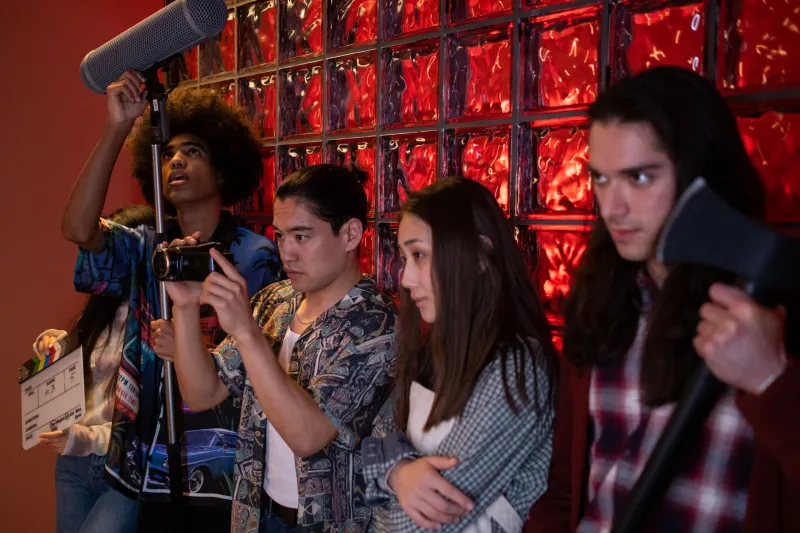
There's a running joke among South Asian screenwriters in Los Angeles: the fastest way to get your script rejected is to make the main character's name unpronounceable to a network executive. It's funny because it's true — or at least it used to be. Something has shifted. And it didn't happen because Hollywood suddenly discovered empathy. It happened because a generation of desi creators stopped asking permission.
Across the country, from Fremont to Flushing, Indian American filmmakers, producers, and storytellers are quietly assembling an entirely new infrastructure for getting their work made and seen. No studio gatekeepers. No diversity initiatives with invisible ceilings. Just community, capital, and a whole lot of hustle.
The Old Model Is Broken — And Everyone Knows It
For decades, the path for South Asian talent in American entertainment was narrow and humiliating. You could play the cab driver, the IT guy, the butt of someone else's joke. If you were lucky, you got a recurring role where your accent was the punchline. The idea of a South Asian filmmaker getting real financing to tell a real story — one that didn't require explaining curry to a white character — was practically science fiction.
Even as representation conversations heated up in the 2010s, the actual power structures barely budged. Studios would greenlight one "diverse" project per cycle, treat it like a social experiment, and then retreat when the marketing felt too complicated. Indian American stories, specifically, were caught in a frustrating middle ground: too niche for mainstream Hollywood, too Americanized for Bollywood's tastes.
So people started building their own doors.
Crowdfunding as a Cultural Statement
Platforms like Seed&Spark, Kickstarter, and even GoFundMe have become unlikely cornerstones of the South Asian indie film movement. What started as a practical workaround has evolved into something more meaningful — a direct line between creators and the communities they're actually making work for.
When a desi filmmaker launches a campaign, they're not just raising money. They're activating a network. Aunties share links in WhatsApp groups. Temple communities rally around stories that reflect their own lives. Second-gen kids donate twenty bucks because they've never seen their specific experience on screen and they want to. The funding becomes participatory. The audience becomes invested — literally — before the first frame is shot.
This model does something that studio financing simply cannot: it removes the middleman who was always asking whether "mainstream audiences" would connect with a story about a Gujarati family in New Jersey or a Tamil American woman navigating grief. The community is the audience. The community decides what gets made.
Streaming Changed the Math Entirely
If crowdfunding opened the front door, streaming blew out the walls. The explosion of platforms hungry for content — not just Netflix and Amazon, but Peacock, Tubi, Plex, and a constellation of smaller services — created a distribution landscape that independent South Asian productions can actually navigate.
A feature film that might have died on the festival circuit a decade ago now has a realistic path to hundreds of thousands of viewers. Short films become proof-of-concept packages for streaming deals. Web series built for YouTube or Instagram Reels evolve into fully funded productions when the numbers prove the audience is there.
Several Indian American production companies have gotten remarkably sharp at working this system. They build audience first — through social media, through community screenings at desi cultural events, through strategic festival runs — and then walk into streaming negotiations with data in hand. It's a fundamentally different power dynamic than pitching cold to a development executive who's never eaten at your grandmother's table.
The Production Companies Writing New Rules
A handful of South Asian-led indie outfits have become genuine models for this new ecosystem. Companies built by and for the diaspora, operating with lean budgets but sophisticated distribution strategies. They're not trying to replicate Hollywood — they're building something structurally different, where creative control stays with the people who actually understand the stories being told.
What makes these companies distinct isn't just the subject matter they greenlight. It's the way they're organized. Many operate with community co-investment structures, where South Asian professionals — doctors, engineers, small business owners — pool resources to fund projects the way immigrant communities have always pooled resources: collectively, with shared pride in the outcome. It's venture capital meets the aunties-and-uncles network, and it works.
These aren't charity projects, either. The financial logic is increasingly solid. The South Asian American community represents enormous spending power, and it is chronically underserved by mainstream entertainment. A well-made film that speaks directly to that audience doesn't need a blockbuster opening weekend to be profitable. It needs its community to show up — and that community, when it sees itself reflected honestly on screen, absolutely does.
What Gets Made When Desis Are in Charge
Here's what changes when South Asian creators control their own financing: the stories get messier, more specific, and infinitely more real.
Instead of the immigrant family narrative that ends with assimilation as triumph, you get films that sit in the contradiction — the daughter who loves her culture and resents it simultaneously, the father who sacrificed everything and still got it wrong, the cousin who stayed in India and somehow ended up with more freedom. These aren't stories Hollywood would greenlight because they don't resolve cleanly. But they're stories that South Asian American audiences recognize in their bones.
You also get genre work that Hollywood never thought to make. Desi horror. South Asian romantic comedies that aren't about arranged marriage. Thriller plots where the brown character is the detective, not the suspect. The creative range explodes when the only brief is "make something true."
The Bigger Picture
What's happening isn't just a business story, though the business is genuinely interesting. It's a cultural reclamation. For generations, the South Asian diaspora consumed entertainment that was made for someone else, about someone else, by someone else. The passive position was the only option available.
That's over. The infrastructure being built right now — the production companies, the crowdfunding networks, the streaming relationships, the community investment circles — is creating something permanent. A foundation that the next generation of desi filmmakers will inherit and build on further.
Hollywood can catch up if it wants to. But it's not being waited on anymore.
The stories are getting made. The audiences are showing up. And the gatekeepers are finding out that the gate wasn't the point anyway.