The Living Room Takeover: How South Asian Stories Are Quietly Winning America's Screen Time War
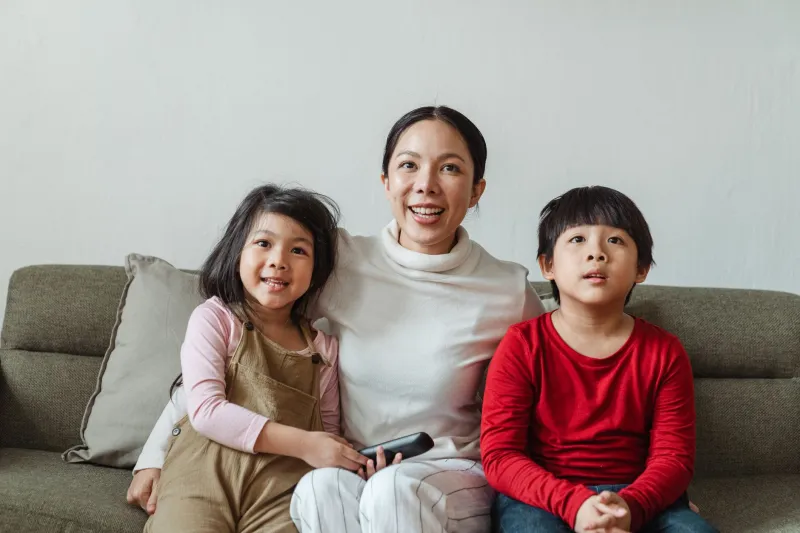
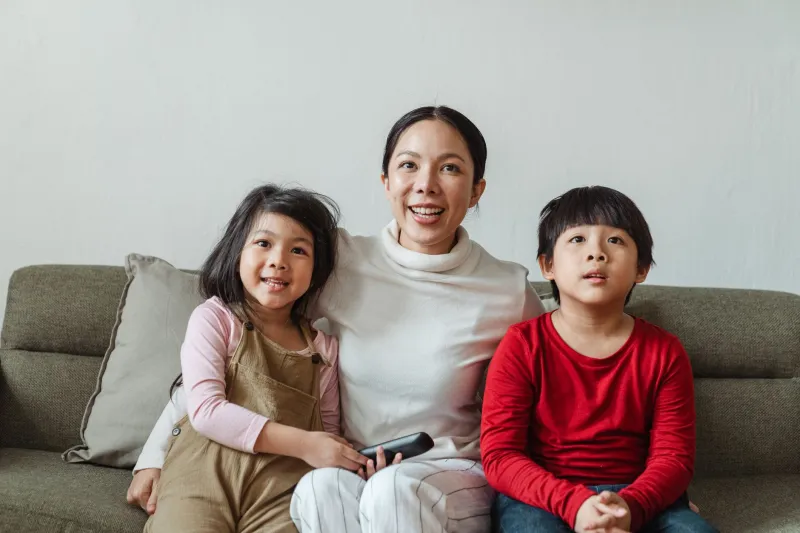
Let's start with a number that should surprise nobody who grew up in a desi household: according to recent streaming analytics, watch time for South Asian content on major platforms has increased by over 60 percent in the United States in the last three years. But the more interesting story isn't in the aggregate data. It's in the specific, granular, beautifully chaotic reality of what's actually happening when American families — desi and non-desi alike — sit down in front of a screen together.
Something has shifted. And it's bigger than any single platform or any single hit show.
The Pipeline Changed First
For a long time, accessing South Asian entertainment in the US required either a satellite dish pointed in the right direction, a stack of DVDs from the local Indian grocery store, or a family member who knew how to navigate gray-market streaming links. The friction was real. The commitment required was significant. Watching Indian cinema was an event, not a default.
That infrastructure problem is now largely solved. Netflix has aggressively expanded its Indian content library. Amazon Prime Video's investment in South Asian originals has been substantial. Dedicated platforms like Eros Now and ZEE5 have made their interfaces genuinely competitive. And YouTube — perpetually underrated as a cultural delivery mechanism — has become an enormous repository of film, music, and regional content that would have been nearly impossible to find in the US a decade ago.
When the friction disappears, behavior changes. And behavior has changed.
The Non-Desi Viewer Nobody Planned For
Here's the part that nobody quite predicted: a meaningful portion of the audience growth for South Asian content in America isn't coming from the diaspora. It's coming from non-South Asian viewers who stumbled into this world and stayed.
The gateway is usually a recommendation — from a friend, a coworker, an algorithm that correctly identified that someone who binge-watched a Turkish drama might also enjoy a Mumbai crime thriller. Shows like Delhi Crime, Panchayat, and Mirzapur have developed genuine cult followings among American viewers with no direct connection to South Asia. The subtitles aren't a barrier anymore. For a generation that mainlined Money Heist and Squid Game, foreign-language content is just... content.
"My roommate — she's from Ohio, no Indian connection whatsoever — got me into Panchayat," says Kavitha Nair, a 29-year-old in Atlanta. "Which is insane to me, because I grew up watching Bollywood and I had somehow never seen it. She found it first."
This crossover isn't just a quirky anecdote. It represents something structurally new: South Asian content competing — and winning — on a level playing field against everything else in the queue.
The Family Watch Equation
But perhaps the most profound shift is happening in multigenerational desi households, where the TV has historically been a site of negotiation and occasional low-grade conflict. Grandparents want the serial. Parents want the Bollywood awards show. Kids want... well, kids want whatever their friends are talking about at school.
What South Asian streaming has done, quietly and effectively, is create content that actually works across that generational table. A prestige drama like Scam 1992 or a family comedy like Yeh Meri Family doesn't require anyone to compromise in the way that, say, choosing between a Hindi film and a Marvel movie does. Everyone comes to the table with context. Everyone has something to say about the story.
"We hadn't watched TV together as a family in years," says Suresh Anand, a father of three in New Jersey. "My kids are teenagers. They're not interested in the shows my wife and I grew up watching. But we found a few Indian shows that they actually got into, and suddenly we're watching together again. It's not nothing."
It's not nothing. In fact, it might be everything.
The Influence Runs Both Ways
What's equally worth noting is the direction of influence. South Asian storytelling isn't just finding an American audience — it's starting to shape American storytelling in return. The success of emotionally complex, family-centered narratives from India has not gone unnoticed in writers' rooms from Burbank to Brooklyn.
The emphasis on ensemble casts, the willingness to let scenes breathe, the centering of domestic and familial drama as genuinely high-stakes — these are narrative values that Indian cinema has long excelled at, and that American prestige TV is increasingly leaning into. Whether the influence is direct or parallel is almost beside the point. The aesthetics are converging.
Producers and showrunners are paying attention. Several Indian American creators who have moved between Bollywood-adjacent projects and mainstream American television have noted a growing fluency on the American side — a willingness to engage with South Asian storytelling frameworks that simply wasn't there five years ago.
What This Means for the Living Room
Here's an opinion, offered plainly: the living room is a political space. What a family chooses to watch together is a statement about whose stories matter, whose emotional reality is worth two hours of collective attention. For decades, the default answer in American homes — including many desi ones — was: Hollywood's stories, told Hollywood's way.
That default is eroding. Not because South Asian content is being forced on anyone, but because it has become genuinely competitive on quality, accessibility, and emotional resonance. When a show from Lucknow or Chennai can make a teenager in New Jersey cry, something important has happened.
Platforms built around South Asian culture — spaces that center these stories without apology or explanation — are part of the infrastructure making this possible. The audience was always there. The content was always good. What changed is that both finally found each other at scale.
The living room isn't just a room anymore. It's a negotiation about identity, belonging, and whose version of the world gets to feel normal. South Asian storytelling is sitting at that table now. And it's not leaving.