Dhak Beats and Downtown Streets: How Durga Puja Became America's Most Unexpected Festival Moment
Somewhere in Edison, New Jersey, a dhakis — traditional drummers who travel from West Bengal specifically for the season — are setting up near a parking lot that has been temporarily transformed into something that looks and feels nothing like New Jersey. There are marigold garlands strung between tent poles, the smell of khichuri drifting from a food stall, and a crowd of a few hundred people dressed in silk sarees and kurtas, many of whom flew in from other states just for this. It's Durga Puja weekend, and if you didn't know better, you'd swear you were standing somewhere in North Kolkata.
Except you're not. You're in suburban America. And that's exactly the point.
From Community Hall to Cultural Landmark
For decades, Durga Puja in the United States was a relatively quiet affair — a beloved but largely internal celebration for Bengali Hindu families who wanted to hold onto something essential from back home. Small pujas happened in temple basements and rented banquet halls, organized by tight-knit community associations that ran mostly on volunteer energy and nostalgia.
That version still exists. But it's been joined by something much bigger.
Over the last ten years or so, Durga Puja celebrations in American cities have scaled up dramatically. The Durga Puja organized by the Puja Association of Greater New York draws tens of thousands of visitors across its multi-day run. In the San Francisco Bay Area, multiple Bengali cultural organizations now coordinate their events to create what amounts to a full festival week. Chicago, Houston, Atlanta, and Boston all have growing celebrations that have started pulling in non-Bengali, non-South-Asian attendees in real numbers.
"When we started, we were honestly just trying to make sure our kids had some connection to where we came from," says one longtime organizer in the Bay Area who has been running Puja events for nearly two decades. "Now we have neighbors — white, Latino, Chinese American families — asking us when tickets go on sale. That shift happened gradually and then all at once."
The Ten-Day Invitation
Part of what makes Durga Puja so well-suited for American festival culture is its structure. Unlike a single-evening celebration, the traditional Puja runs across multiple days — culminating in the final immersion ceremony known as Bisarjan — which gives organizers room to build out programming that goes well beyond religious ritual. Think cultural performances, art installations, cooking demonstrations, film screenings, fashion showcases, and food markets.
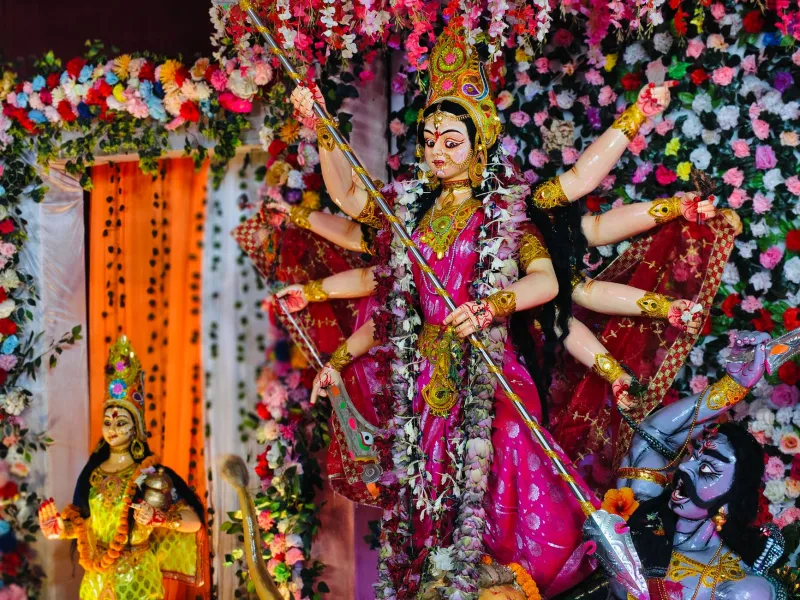
In cities with larger Bengali populations, the Puja pandal (the elaborately decorated temporary structure housing the goddess's idol) has itself become an art event. In Kolkata, pandal-hopping is a sport. In America, that tradition is taking root too, with multiple organizations in the same metro area creating distinct visual experiences that draw people specifically to see the craftsmanship.
"We brought an artisan from West Bengal this year to do the idol work," explains a New York-based organizer. "People were watching him work days before the Puja even started. It became its own attraction."
Local officials in cities with significant South Asian populations have started to take notice. Several city councils have issued formal proclamations recognizing Durga Puja, and in at least a few cases, local governments have provided permits and logistical support that treat the celebration with the same infrastructure consideration as established American street festivals.
Not Just Bengali Anymore
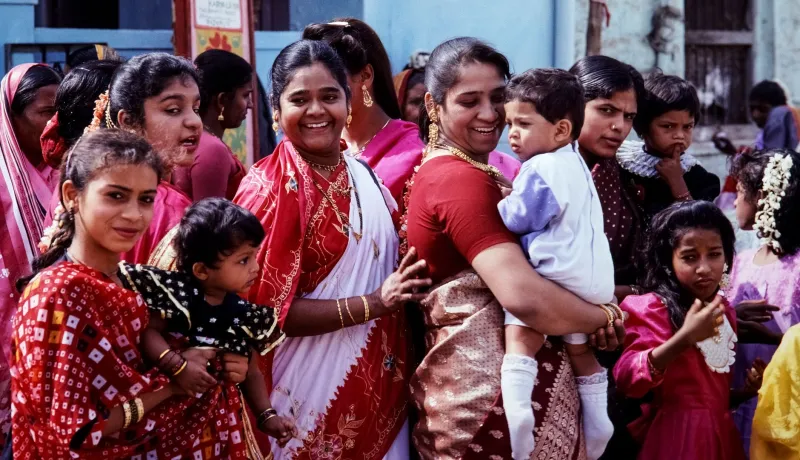
One of the more interesting developments in American Durga Puja culture is how the festival has started to pull in the broader South Asian community — and beyond. Durga Puja has traditionally been a Bengali Hindu celebration, and that identity remains central. But in the American context, where South Asian communities often live and socialize across regional lines, the Puja has become something of a shared cultural space.
You'll find Gujarati families at New York Pujas, Tamil American kids learning the dhak rhythm, and Punjabi aunties lining up for the bhog prasad alongside Bengali grandmothers. The food stalls often expand well beyond traditional Bengali offerings to accommodate the mixed crowd.
"In India, a Bengali Puja is a Bengali thing," one attendee in Houston put it. "Here, it becomes a South Asian thing, and then it becomes a neighborhood thing. That's just how it works when you're a minority building community."
That expansion hasn't come without some internal conversation about authenticity and ownership. Some longtime organizers are thoughtful about maintaining the religious and cultural specificity of the celebration even as the guest list grows. The ritual elements — the anjali, the sindoor khela, the Bisarjan procession — remain intact and central. The festival grows around those roots, not over them.
Diwali Had a Head Start, But Durga Puja Is Closing the Gap
Diwali is undeniably the South Asian festival that has achieved the widest American mainstream recognition. It's in the White House, it's on Hallmark cards, it's got its own Target display. Durga Puja is not there yet — and honestly, many of its organizers aren't sure they want exactly that kind of commercial saturation.
What they do want is recognition. And that's coming.
In 2023, New York City added Diwali to its public school calendar as an official holiday. Advocates for Durga Puja recognition in the school system are watching that precedent carefully. In cities like Fremont, California, where the South Asian population is substantial and growing, the Puja has become something local media covers as a matter of course rather than a novelty.
"The question isn't whether Durga Puja will be recognized," says one community leader in New Jersey. "It's what kind of recognition we want and on whose terms. We've watched what happened with yoga, with Diwali, with Holi. We're trying to be intentional about how we grow."
What It Actually Feels Like
If you've never been to an American Durga Puja, the sensory experience is worth describing. The dhak drumming is genuinely loud and genuinely hypnotic — it's one of those sounds that seems to vibrate somewhere inside your chest. The idol work is extraordinary, with Durga typically depicted in her full ten-armed form, poised above the demon Mahishasura, surrounded by her children. The color and scale of a well-made pandal stop people mid-step.
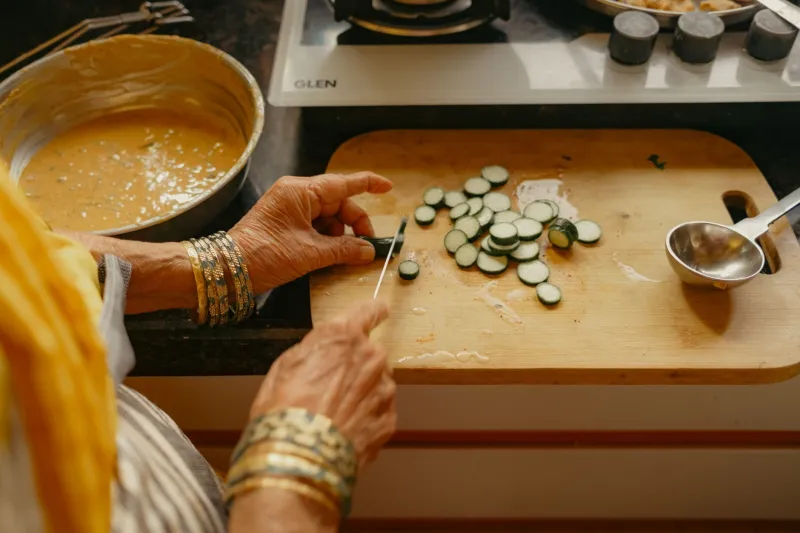
And then there's the food. The bhog — the ritual meal typically featuring khichuri, labra, and chutney — is distributed free to all attendees at many American Pujas, a tradition that translates beautifully into the American context of communal public gathering.
"You give someone free food and let them watch something beautiful, and suddenly they're coming back next year," says one organizer with a laugh. "That's not a secret formula. That's just hospitality."
American Durga Puja is still finding its shape. It's part religious ceremony, part cultural preservation project, part neighborhood block party, and part artistic showcase — all at once. That complexity is what makes it interesting. And if the trajectory of the last decade is any indication, a lot more Americans are about to discover it for the first time.