Kishore vs. Arijit: The Silent DJ Booth Standoff at Every Desi Wedding

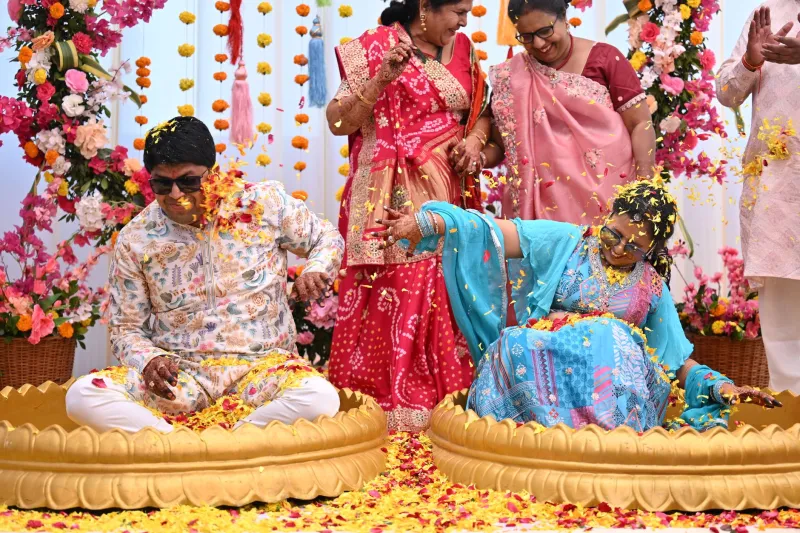
Photo: indian wedding dj dance floor celebration crowd, via img.freepik.com
Somewhere between the cocktail hour and the sangeet, it happens at every single Indian American wedding. A cousin signals the DJ. An uncle signals harder. And somewhere in the booth, a person with a laptop and a sound system worth more than a used Honda has to make a choice that will determine the mood of the next forty-five minutes.
Old song or new song? Kishore Kumar or Arijit Singh? Retro remix or straight from the '90s? Welcome to the wedding playlist wars — the most polite armed conflict in the diaspora.
The Two Fronts of the Dance Floor
Ask any South Asian wedding DJ working the American circuit and they'll describe the same battlefield map. On one side: the first-generation crowd, folks who landed in the US in the '80s and '90s carrying cassette tapes of R.D. Burman and Lata Mangeshkar in their luggage. On the other: their kids and nieces and nephews, raised on a steady diet of Spotify's 'Bollywood Butter' playlist and Instagram Reels audio.
"The uncle request usually comes with eye contact and a slow nod," says a New Jersey-based DJ who asked to go by DJ Rohan for wedding bookings. "The cousin request comes as seventeen Instagram DMs with timestamps. Both are non-negotiable, apparently."
The tension isn't really about music, of course. It's about ownership of the moment. For parents, the golden-era soundtrack is a direct line to their youth — college canteens in Delhi, bus rides in Bangalore, the first movie date that maybe involved some discreet hand-holding. For the twenty-somethings, the newer catalog is the sound of their own coming-of-age: prom afterparties, college road trips, that one viral dance trend they actually nailed.
Why Bollywood's Soundtrack Keeps Splitting the Room
Here's the thing that makes this particular generational divide sharper than, say, a boomer-versus-millennial fight over Fleetwood Mac: Bollywood's sound genuinely transformed between generations.
The music of the Kishore Kumar, Mohammed Rafi, and Lata Mangeshkar era was built for melody — singers as stars, orchestras doing the heavy lifting, songs that lived for five minutes and told a whole story. Then came the A.R. Rahman revolution, the remix era, and finally the current landscape where a film's soundtrack is engineered partly for Instagram traction. A thirty-second hook matters as much as the full track.
So when an auntie requests "Chura Ke Dil Mera" and a cousin counters with "Tum Hi Ho," they're not just arguing about taste. They're arguing about two different philosophies of what a song is supposed to do.
The DJ's Survival Guide
The pros have developed tactics worthy of a diplomatic summit:
- The bridge track. Songs like "Mera Joota Hai Japani" or "Mehndi Laga Ke Rakhna" are multigenerational truce music — old enough for the elders, iconic enough that Gen Z will perform a full choreographed routine to them.
- The slow burn. Start the night retro, earn the elders' trust, then pivot to Punjabi pop once the aunties have had their chai and their moment.
- The remix gambit. A well-produced remix of a classic can satisfy both camps — or, in the wrong hands, offend both simultaneously. High risk, high reward.
- The dhol reset. When all else fails, live percussion ends all debate. Nobody has ever argued with a dhol player mid-set.
Six Songs That Actually Get Everyone Moving
Want to avoid a standoff at your own function? This crowd-tested list is about as close to a ceasefire as it gets:
- "Jai Jai Shiv Shankar" — old-school energy that converts even the skeptical twenty-something.
- "Mehndi Laga Ke Rakhna" — the wedding song. Non-negotiable. Universally beloved.
- "Kala Chashma" — the great unifier of the last decade.
- "Gallan Goodiyaan" — a whole-family dance number built for living rooms and banquet halls alike.
- "Mauja Hi Mauja" — guaranteed auntie-bhangra crossover.
- "Saat Samundar Paar" — the retro pick that makes Gen Z feel like they discovered something.
The Real Lesson in the Booth
The playlist wars sound trivial until you realize what they actually represent: two generations of the same family, raised a continent apart, negotiating shared identity three minutes of music at a time. The uncle isn't really fighting for Kishore Kumar. He's fighting to be part of the party his kids built. And the cousins, if you watch closely, usually give in by midnight — right around the time the whole room, all ages, ends up screaming the chorus to "Made in India" together.
Some wars end in treaties. This one ends in a conga line.