Choreographed to the Nines: The Quiet Industry Behind Every Sangeet You've Seen on Instagram
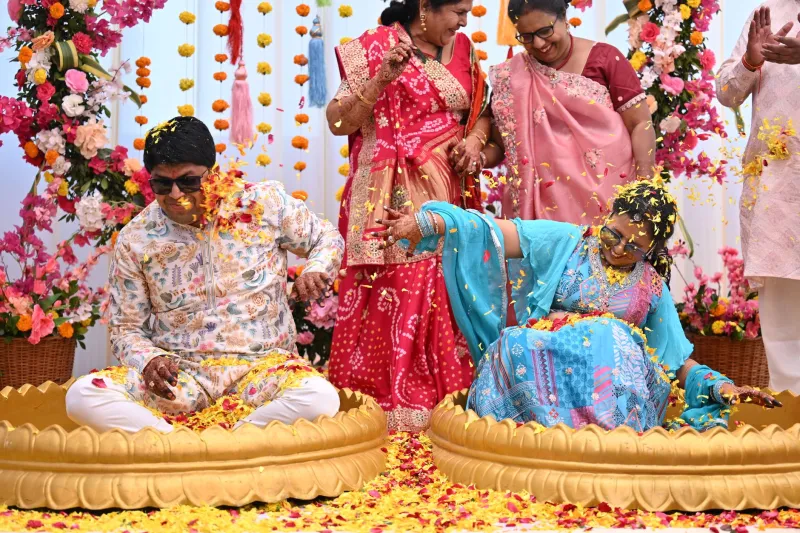
Somewhere in New Jersey this weekend, forty people in coordinated outfits will perform a nine-minute medley that transitions from a Punjabi bhangra number into a Bruno Mars remix without missing a beat. A professional choreographer will have run rehearsals for six weeks. A videographer will capture it with a drone. A lighting tech will have plotted the cues.
None of this is unusual anymore. It's an industry — a big one.
From Living Room to Light Cue
The sangeet, traditionally a night of music and celebration before the wedding, was once the domain of enthusiastic aunties and whatever choreography a cousin picked up from the latest Shah Rukh film. The performances were charming precisely because they were amateur.
Then two things happened: South Asian weddings in America grew into a multi-billion-dollar market, and Instagram made every performance a portfolio piece. The result is what some planners half-jokingly call the sangeet industrial complex — a network of choreographers, dance academies, videographers, and rental lighting companies that treats the family performance as a professional production.
Dance academies in the New York, Chicago, and Bay Area metros now derive a meaningful share of revenue from wedding commissions. Rates vary by region and scale, but couples routinely spend thousands on choreography alone — more for multi-day events with separate bride-side and groom-side routines.
The People in the Rehearsal Room
For the artists, it's genuinely good work. Neha Sharma (not her real name — she keeps a day job) has choreographed over a hundred sangeet performances since 2018, working out of a rented studio space in the Chicago suburbs.
'It's the most joyful money I'll ever make,' she says. 'But people don't see the logistics. You're choreographing for a groom's uncle who has two left feet and a bridesmaid who trained in Kathak. You're fitting rehearsals around jobs, kids, flight schedules. Half my job is diplomacy.'
The best choreographers describe themselves less as dancers than as editors of family dynamics. Whose solo gets the crowd pop? How do you stage a mother-son dance so it doesn't feel like a hostage situation? The dance is the easy part.
The Cost Question
Not everyone is celebrating the professionalization. A vocal segment of couples — and their parents — are pushing back on the arms race.
'At some point we looked at the quote and asked, are we hiring a choreographer or a wedding director?' says one recently married couple in Dallas, who ultimately scaled their sangeet back to a single group number rehearsed over three weekends at a relative's house. 'It was chaotic and off-beat in places and honestly it's the thing everyone still talks about.'
That sentiment is showing up in wedding planning forums and, increasingly, in how planners pitch their services. Some now offer 'low-key sangeet' packages — minimal choreography, open-floor format, more singing and less staging. It's a small corrective, and it's growing.
What the Performance Is Actually For
The tension here is worth sitting with, because it's really a question about what weddings are for. The sangeet's original spirit was participation — everyone sings, everyone dances, the division between performers and audience dissolves. Professional spectacle doesn't kill that, but it can crowd it out. When the performance is perfect, the point of performing together gets quieter.
The couples who seem happiest with their choices, whatever they spent, are the ones who've answered that question deliberately. Some want the spectacle — a once-in-a-lifetime stage, a real production, family members who trained for weeks and will remember it forever. That's legitimate. Others want the mess, the missed cues, the uncle who steals the show by accident. Also legitimate.
The industry isn't going anywhere; the demand is real and the artistry is often excellent. But it's worth remembering that the most replayed sangeet clip in most families isn't the drone shot. It's the moment everything went slightly wrong and everyone laughed.
Choreograph accordingly.