What to Keep, What to Let Go: The Quiet Cultural Reckoning Inside Indian American Families
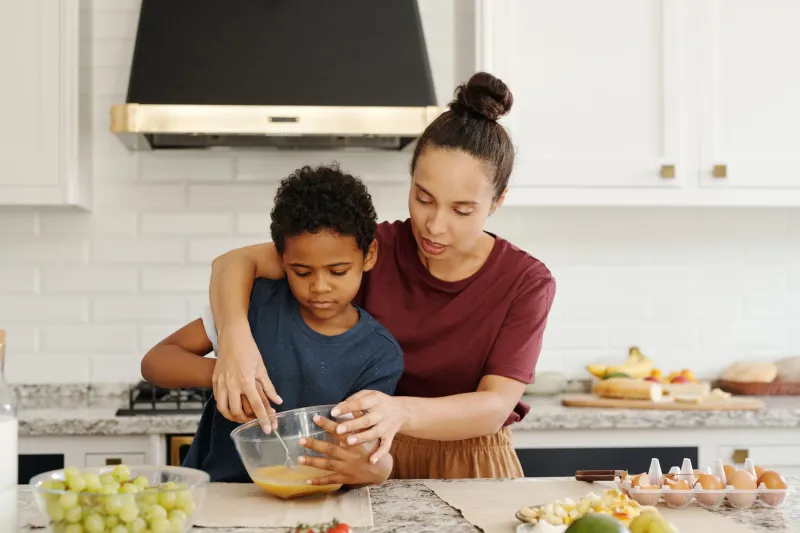
Neha Sharma can tell you exactly when she realized she'd made a choice she hadn't meant to make.
Her daughter was seven, sitting at the kitchen table in their house outside of Columbus, Ohio, when she asked what the small brass figurine on the shelf was. Neha explained — Ganesha, remover of obstacles, you pray to him before something important. Her daughter nodded, satisfied, and went back to her coloring book.
It was only later, washing dishes, that Neha realized she'd explained it the way she would to a stranger. Informative. Accurate. Entirely without the felt sense of devotion she'd grown up with. "I gave her the Wikipedia version," she says. "And I didn't even notice I was doing it."
This is the quiet reckoning at the center of Indian American family life: not a dramatic rejection of heritage, but a slow, often unconscious process of editing. What gets passed down. What gets translated. What gets left at the door.
The Calculus Nobody Teaches You
Immigrant parents from India who arrived in the US in the 1980s and 90s largely didn't have a blueprint for this. They were figuring out careers, mortgages, health insurance — the enormous practical machinery of building a new life. Culture, in many cases, happened around the edges. Festivals were observed. Languages were spoken at home. Relatives called from overseas and the kids were handed the phone.
But nobody handed these parents a rubric for what to prioritize when time and energy and American assimilation pressure were all pulling in different directions simultaneously.
The result is that every family has made their own calculation, often without fully realizing it. And those calculations vary wildly — sometimes within the same neighborhood, sometimes within the same household.
"My husband and I grew up in different parts of India," says Lakshmi Venkataraman, a mother of two in the Bay Area. "He's Tamil, I'm Gujarati. We already had to negotiate which traditions we were even going to do before we got to the question of how much we'd teach our kids. Some stuff just fell away because we couldn't agree on it ourselves."
Language: The First Thing to Slip
For most families, language is where the erosion begins — and where the grief is sharpest. Studies of immigrant communities consistently show that heritage language fluency drops dramatically by the third generation. Among Indian Americans, the second generation often has passive comprehension of a parent's language but limited speaking ability. By the third generation, even that frequently disappears.
Parents know this. Many have tried to slow it down — Hindi classes on Saturday mornings, Tamil school at the temple, apps, tutors, trips to India timed to coincide with cousins who only speak Gujarati or Telugu or Punjabi. Some of it works. Much of it doesn't stick.
"My son can understand everything I say to him in Kannada," says Ravi Krishnaswamy, a software engineer in Seattle. "He just refuses to respond in it. He says it feels fake. And I don't fully disagree with him, which is the frustrating part."
The honesty in that admission is striking. Many Indian American parents describe a similar dissonance — pushing for something they're not entirely sure they believe their children can authentically inhabit. Language, for the American-born generation, can feel like a costume rather than a skin.
The Things That Survive
But it's not all erosion. Some things, often surprising ones, cross the generational wire with unexpected force.
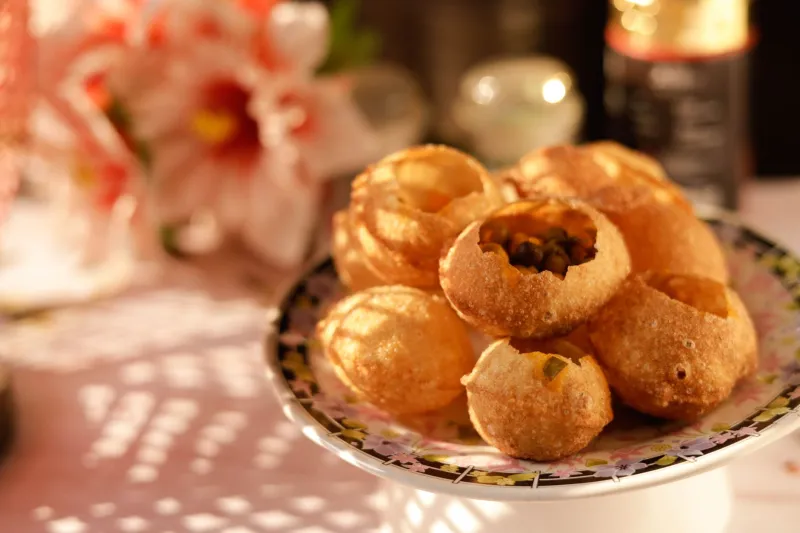
Food is the obvious one — desi kitchens persist even when temples don't. But beyond food, parents report that certain stories, certain films, certain songs seem to land with their kids in ways that structured cultural instruction never does.
"My daughter is obsessed with old Bollywood movies," says Anjali Desai, a physician in Houston. "Like, legitimately obsessed. She found them on her own, through YouTube. Now she knows more about 1970s Hindi cinema than I do. I didn't teach her that. She just found her way there."
This points to something important: cultural transmission isn't always a top-down process. Kids sometimes reach back toward heritage on their own terms, drawn by curiosity or aesthetics or a desire to understand where they came from. The parents who seem most at peace with the inheritance question are often those who created conditions for discovery rather than mandating participation.
The Guilt Is Real
Still, guilt is a constant companion. The fear of being the generation that broke the chain — that failed to transmit something irreplaceable — sits heavily on many Indian American parents, especially as their own parents age and the living links to the old country become more fragile.
"My mother knows things I will never know," says Preethi Rao, a teacher in Chicago. "Rituals, stories, prayers. And I've never sat down and recorded any of it. Every time I think about that, I feel sick. But then life happens and another year goes by."
This isn't unique to South Asian families, of course. Every immigrant community navigates some version of this grief. But the particular richness and complexity of Indian culture — the regional diversity, the religious depth, the centuries of artistic tradition — can make the sense of potential loss feel especially acute.
Choosing What's Worth Fighting For
What emerges from conversations with Indian American families across the country is less a crisis and more a negotiation — ongoing, imperfect, and occasionally surprising in its outcomes.
Some parents have made deliberate choices to let certain things go — formal religious practice, specific regional customs, particular food restrictions — in order to hold more tightly to other things: stories, music, values around family and hospitality and respect for elders. It's not surrender. It's prioritization.
"I can't give my kids everything," says Neha, back in Columbus. "There's not enough time and they're growing up here, not there. So I've decided to focus on the stuff that I think will actually matter to them someday. The stories. The food. The feeling of being connected to something bigger than just our little family in Ohio."
She pauses. "And I'm trying to tell them about Ganesha like I actually believe it. Not like I'm reading from a card."
That, maybe, is the whole project. Not a perfect transmission of everything, but an honest one. Imperfect, partial, and alive.