Golgappa to Gold: How Desi Street Food Became the Diaspora's Hottest Business Bet
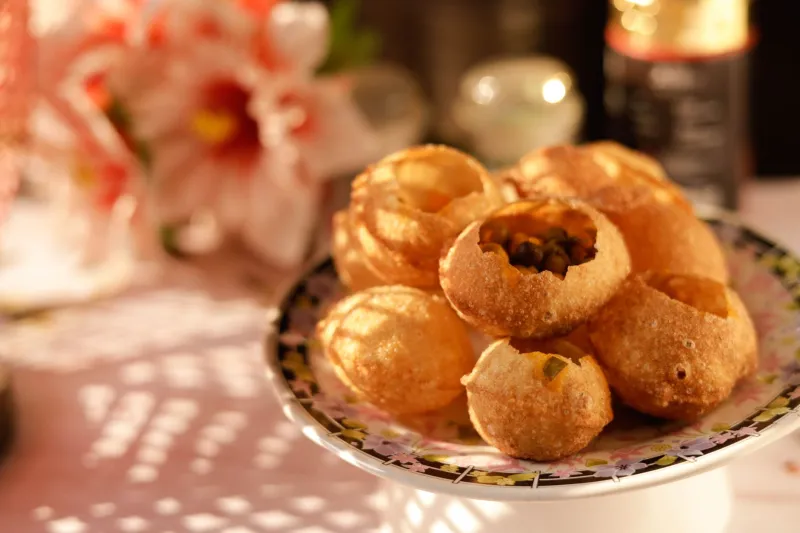
Ask any South Asian American to describe their most visceral food memory and there's a decent chance it involves something you cannot get at a sit-down restaurant. Not butter chicken. Not biryani. Something messier and more specific — a panipuri eaten standing up at a stall in Chandni Chowk, a plate of bhel puri balanced on a newspaper cone at Juhu Beach, a pav bhaji so aggressively buttered it qualified as a cardiac event. These are the foods of streets and crowds and chaos, and for decades they existed in the diaspora mainly as memory and nostalgia.
That's changing fast. Across the United States, a generation of South Asian entrepreneurs is building serious businesses around exactly these foods — and the scale of what's happening goes way beyond a few food trucks.
The Craving That Launched a Thousand Carts
The economics of Desi street food in America start with a simple, powerful fact: the demand was always there. Immigrant communities have been making chaat at home and at community events for as long as they've been here. What was missing was infrastructure — the vendors, the supply chains, the cultural permission to sell this food in mainstream American contexts rather than keeping it tucked inside community kitchens.
The first wave of street food entrepreneurs largely served Indian American neighborhoods directly. Edison, New Jersey. Devon Avenue in Chicago. Artesia in Southern California. These were insular markets, which made them reliable but limited. The vendors who cracked the code for the second wave figured out something different: that this food could travel.
Take the panipuri pop-up circuit that's been running through cities like Austin, Atlanta, and Seattle over the last few years. These aren't events targeting South Asian neighborhoods exclusively — they're drawing mixed crowds of food-curious Americans who found out about them through TikTok and showed up because the content looked genuinely exciting. The food does the rest.
The TikTok Effect
It's impossible to overstate how much short-form video has changed the landscape for Desi street food businesses. The visual drama of panipuri — the hollow crispy sphere, the spiced water filling, the immediate consumption — is almost algorithmically engineered for a viral moment. Same with the theatrical sizzle of a tawa pulao or the layered assembly of a properly built dahi puri.
Creators like Urvashi Pitre and a newer generation of food-focused accounts have built massive followings by leaning into exactly this visual energy. But the more interesting story is what happens when those content creators become entrepreneurs — or when existing vendors figure out that their stall is actually a media company that happens to sell food.
Kavita Mehta, who runs a chaat pop-up operation out of the Bay Area that she started in 2021, describes her content strategy with the clarity of someone who has thought about it a lot. "I post the process, not just the product," she says. "People want to see the tamarind chutney being made. They want to understand what they're eating. And when they understand it, they're not just customers — they become advocates."
Her operation has grown from weekend farmers market stalls to catering corporate events in San Francisco's tech corridor. She's in conversations with two restaurant groups about a brick-and-mortar concept. The TikTok following didn't cause that growth directly — but it created the credibility and the audience that made every subsequent conversation easier.
From Cart to Franchise: The Business Architecture
What makes the current moment genuinely interesting from a business perspective is that some operators are thinking well beyond the pop-up model. A handful of South Asian street food concepts have begun building the kind of systems infrastructure that signals franchise ambitions — standardized recipes, supply chain relationships, training manuals, the whole apparatus.
This isn't just about money, though the money is real. It's also about legitimacy. For a long time, Indian food in America was legible to mainstream culture primarily through the lens of sit-down restaurants — a specific, somewhat formal context that filtered out a lot of what makes the cuisine actually exciting. Street food formats carry a different energy. They're fast, social, loud, and affordable in a way that maps onto how Americans already think about eating out.
Fast-casual concepts built around chaat, kathi rolls, and dosas are starting to compete directly with established American fast-casual brands in urban markets. Some of them are winning. The Dosa by DOSA group in San Francisco has been making this argument for years. Newer entrants in cities like Houston, New York, and Chicago are following a similar playbook with different regional specialties.
The franchise question is still open — nobody has quite cracked the code on how to scale panipuri to a hundred locations the way Chipotle scaled the burrito bowl. But several operators are actively working on it, and the investment interest is there.
What's Actually Being Preserved
There's a cultural conversation running underneath the business story that's worth paying attention to. Street food in South Asia isn't just food — it's a social infrastructure. The panipuri wala at the corner of your neighborhood is a fixture of daily life, a place where class distinctions briefly dissolve because everyone is standing at the same cart eating the same thing.
When that experience gets translated to an American context, something shifts. The food can be reproduced with reasonable accuracy. The social context is necessarily different. A pop-up at a weekend market in Brooklyn is not the same thing as a street stall in Ahmedabad, and the people running these businesses are generally honest about that.
What they're preserving is the flavor memory — the specific combination of sweet, sour, spicy, and tangy that triggers something deep in the emotional architecture of anyone who grew up eating this food. For the diaspora, that's not a small thing. It's a thread back to a place and a self that can feel very far away.
For the Americans discovering these foods for the first time, it's something simpler and maybe equally powerful: a genuinely new eating experience in a food culture that often feels like it's running out of new things to try.
The panipuri economy is real. And it's just getting started.