Thirty Minutes in the Gym: What a Diwali Assembly Can and Can't Teach a School
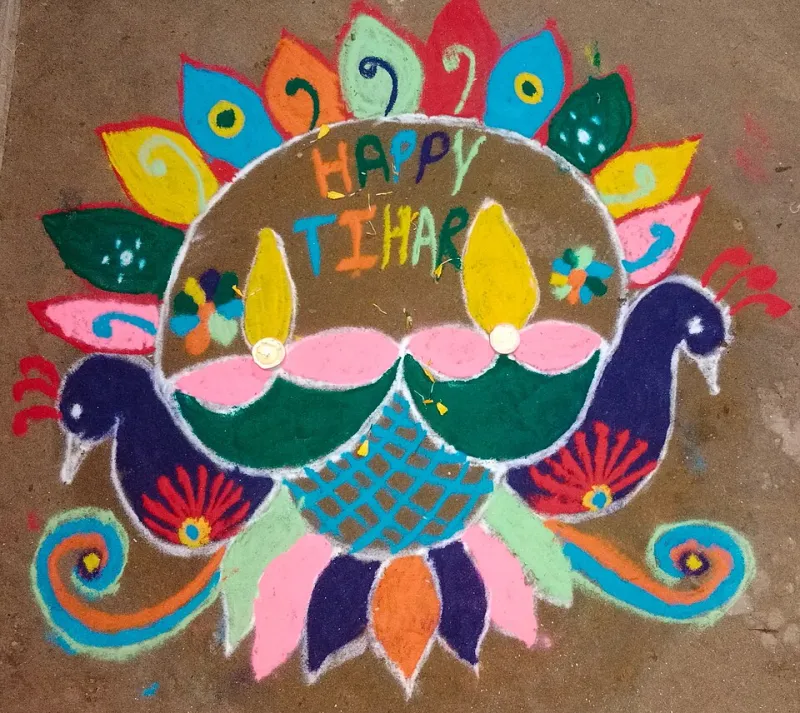
Photo: Subarna Majhi, CC BY-SA 4.0, via Wikimedia Commons
The gym smells like floor wax and sneakers. On the stage, a rangoli is being assembled out of colored powder on a sheet of butcher paper, because real powder on a gym floor is a conversation nobody wants to have with the custodial staff. Two third graders are holding a diya made of clay and glitter. A parent volunteer is testing a laptop with the school's projector, which is doing the thing where it works fine and then suddenly doesn't.
It is 8:40 in the morning. Assembly starts at 8:45.
The Calendar Changed First
The shift didn't begin with assemblies. It began with calendars. New York City added Diwali as a public school holiday starting in 2023, and a growing number of districts around the country have since moved to recognize it — sometimes as a day off, sometimes as a listed observance, sometimes as a line item a principal checks before scheduling the fall concert.
Once Diwali is on the calendar, something follows. If you're closing for it, or noting it, you probably ought to explain it. And so the assembly was born — usually in November, usually in the gym or the cafeteria or, in one memorable case, the parking lot.
What a Good One Actually Does
The assemblies that work tend to share a few traits, according to parents who've organized them.
They're short. Twenty to thirty minutes, built for the attention span of a seven-year-old, with no more than three segments. A rangoli demonstration, one dance number, and a two-minute explainer beats a forty-minute lecture every time.
They're hands-on. The best ones involve the audience — a diya-painting station at lunch, a rangoli template on paper that every kid gets to fill in, a plate of sweets passed around at the end. Kids remember what they touched.
They're specific rather than sweeping. Saying "Diwali is the festival of lights" is fine. Saying "in my house we clean the whole place, my mother makes these, and we light this many diyas" is better. A single concrete detail — a grandmother's recipe, a specific kind of firecracker from a specific city — does more work than any slide deck.
And they're student-led where possible. Desi kids who want to be on that stage should get a say in what's on it. Several organizers say the most meaningful moments have come from a second grader explaining her own family's celebration, badly and confidently, to her classmates.
The Explain-It-Again Tax
Here's the part that doesn't make it into the photo op. The labor almost always falls on a small number of mothers — usually the same ones, usually the ones with the most flexible schedules and the most ambivalent relationship with being the designated cultural representative.
It's a real accounting. Time off work. Money for craft supplies. The emotional cost of answering the same questions, in the same bright voice, for the fourth year in a row, from adults who could have Googled it. There's a specific fatigue that comes from being the person the school emails in September with a subject line that is just "Diwali?"
Some parents have started pushing back, gently. They rotate the lead. They send a short primer document to teachers. They ask the school to fund the supplies rather than donating them. They invite non-desi parents to help run the craft table, which quietly converts a performance into a shared project.
Where It Tips Into Performance
There's a version of the Diwali assembly that curdles — the one where a teacher introduces it as a "cultural experience," the dance is performed by students who've had two rehearsals, and the whole thing ends with a round of applause for diversity in the abstract.
Organizers recognize the signs. Costumes bought rather than borrowed. Every kid dressed identically. A slide that begins "India is a land of..." Kids in the audience being told to sit still and appreciate.
What's off about it isn't the celebration. It's the framing. A festival being explained at a room is different from a festival being shared with a room, and children can tell the difference even when the adults can't.
The other snag is time: Diwali runs five days, and families don't observe it identically. A school that schedules the assembly on a specific date and treats that date as the festival will inevitably be slightly wrong for a chunk of its families. Accepting that, and saying so out loud, goes a long way.
The Kids in the Room
The instinct to protect kids from being put on display is right. But it's worth noting what actually happens in a gym in November. A boy whose family is from Gujarat watches his mother draw a rangoli. His classmate, whose family is from Ohio, asks if she can make one too. They both get powder on their sleeves.
That's not a curriculum. It's thirty minutes before first period. But it's also the moment a seven-year-old learns that his home is a place the school considers worth making room for — which is a lesson no amount of online learning modules can deliver.
It just shouldn't have to come with a supply run to Michaels on a Tuesday night. Fund the supplies. Rotate the moms. Keep it short. Light one diya, and let the kids get to class.