Old Rituals, New Roots: How Indian American Families Are Writing Their Own Ceremonial Playbook
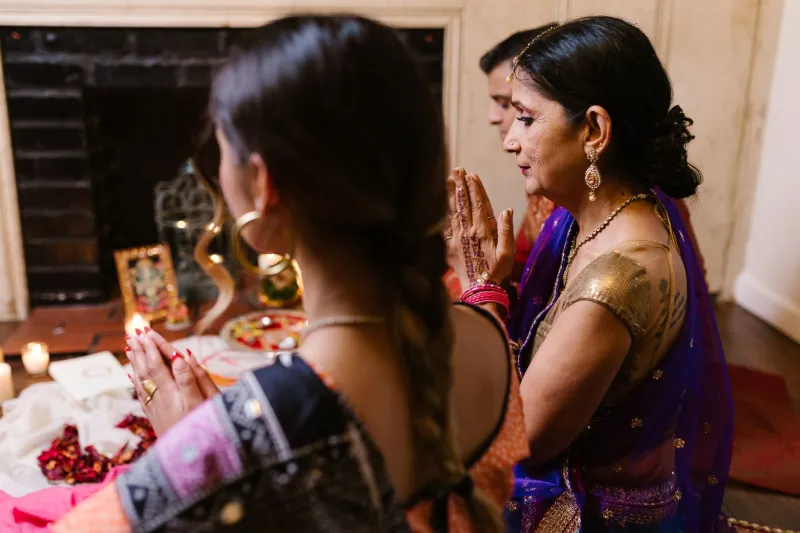
Somewhere in a living room in Naperville, Illinois, a family gathers around a newborn wrapped in a mustard-yellow blanket. A pandit chants Sanskrit shlokas from a laptop screen — he's dialing in from Jaipur — while the baby's maternal grandmother holds a gold pen, ready to write the child's name in honey on a small silver plate. The name? Zara Ananya Mehta. Half Persian-inspired, half Sanskrit, entirely her own.
This is not your textbook Namkaran ceremony. And that's exactly the point.
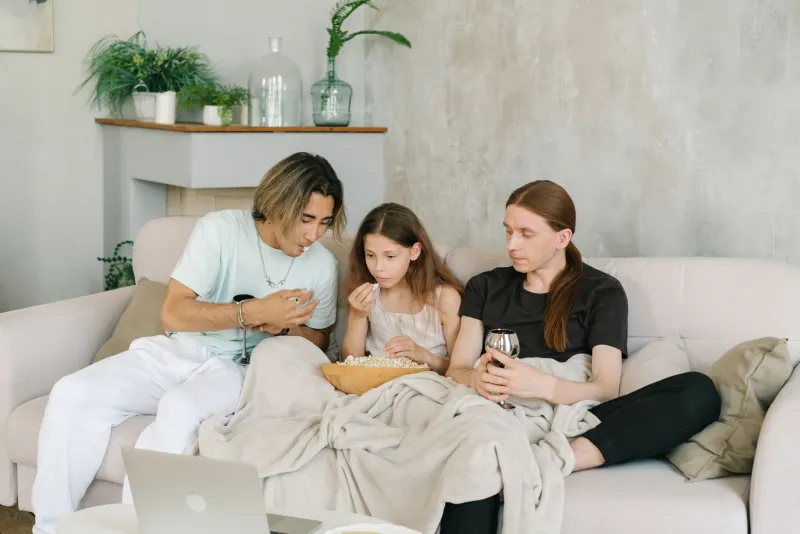
Across the US, second and third-generation South Asian families are doing something quietly radical — they're not abandoning their ancestral ceremonies, and they're not copying them wholesale either. They're rewriting them, one milestone at a time, to fit lives that exist beautifully between two worlds.
What the Old Playbook Actually Said
For generations, Indian life was organized around a set of rituals called the Samskaras — sixteen rites of passage that marked everything from conception to cremation. The Namkaran, or naming ceremony, happened on the eleventh or twelfth day after birth. The Upanayana marked a boy's initiation into formal education. The Vivah, of course, was marriage — a multi-day, multi-family production that nobody forgot.
These weren't just cultural checkboxes. They were load-bearing structures. They told a child who they were, where they came from, and what was expected of them. In villages and joint families, everyone showed up. The ritual did its job precisely because it was collective and consistent.
Then families immigrated. Joint households became nuclear ones. Villages became suburbs. And the rituals had to figure out how to travel.
The Remix Generation
Priya Krishnamurthy, a 34-year-old software engineer in Austin, Texas, remembers her own childhood milestones as warm but slightly disconnected. "My parents did their best," she says. "We had a puja for everything. But I never fully understood what was happening or why. It felt like something we did because we were supposed to."
When Priya's daughter was born in 2021, she made a different choice. She spent months researching the Namkaran's original meaning — the idea that a name carries vibration, intention, and ancestral memory — and then built a ceremony that honored that philosophy without requiring anyone to pretend they lived in 1970s Tamil Nadu.
The ceremony included a Sanskrit naming component led by a local priest, a reading of a poem Priya wrote in English about her daughter's future, and a "name story" segment where each family member shared why the chosen name — Kaveri, after the river — meant something to them. Her husband's Irish-American mother cried. Her own mother said it was the most meaningful Namkaran she'd ever attended.
"It wasn't more or less traditional," Priya says. "It was just honest about who we actually are."
Graduation as a Sacred Threshold
Namings aren't the only ceremonies getting the remix treatment. Graduations — especially college ones — have quietly become one of the most emotionally loaded milestones in the Indian American calendar, and families are starting to treat them with the same ceremonial weight as a shaadi.
For many South Asian parents who sacrificed enormously to give their kids access to American higher education, watching a child walk across a stage at Michigan or UT Austin or Johns Hopkins isn't just proud-parent stuff. It's the fulfillment of a generational promise. And increasingly, families are marking that with intention.
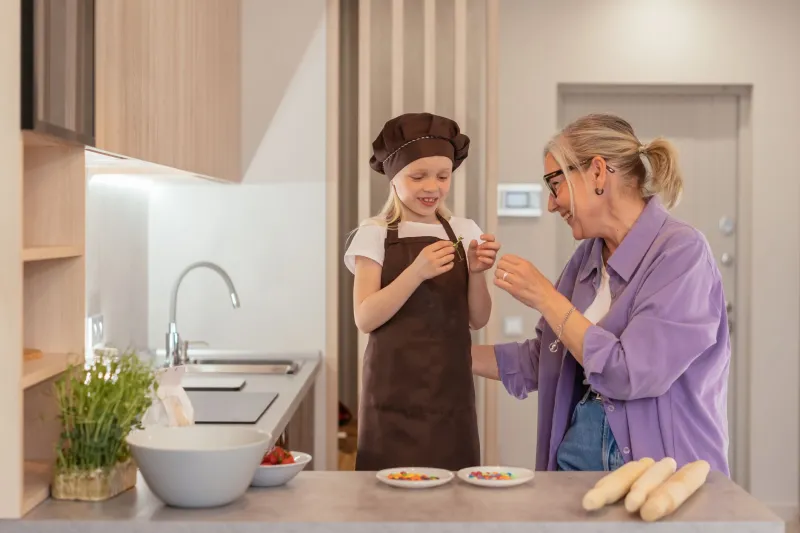
Some families are incorporating a modified Saraswati Puja — traditionally done at the start of an academic journey — at the end of one, as a kind of bookend blessing. Others are creating entirely new rituals: a grandfather presenting his granddaughter with the pen he used to sign his immigration papers; a family meal where each elder shares one piece of wisdom the graduate must carry forward.
Raj Anand, a 22-year-old pre-med student from Fremont, California, says his family did something unexpected at his graduation dinner last spring. "My dad brought out this old steel dabba — a tiffin box — that his mother had packed his lunch in when he was studying for his engineering exams in Pune. He gave it to me. He didn't make a big speech. He just said, 'Now it's yours.' I didn't know what to say. I still think about it."
Nobody planned that moment. But it landed like a ceremony.
When Languages Share the Same Stage
One of the most interesting fault lines in these new rituals is language. Sanskrit, Tamil, Telugu, Hindi, Punjabi — these carry the weight of tradition. English carries the weight of daily life. And more and more families are refusing to choose between them.
At a recent Annaprashan — a Bengali first-feeding ceremony — held in a community hall in Edison, New Jersey, the officiating priest conducted the core ritual in Bengali and Sanskrit, but the family had printed bilingual booklets explaining each step in English. The baby's older sibling, age seven, read a short poem she'd written in English about what it meant to welcome her baby brother to solid food. The room, full of grandparents who barely spoke English and cousins who barely spoke Bengali, somehow felt unified.
"Language is where identity lives," says Dr. Ananya Sen, a cultural anthropologist at NYU who studies South Asian diasporic practices. "When families find ways to hold multiple languages inside a single ritual, they're not diluting the tradition. They're expanding its capacity to hold more of who they are."
The Quiet Art of Keeping It Alive
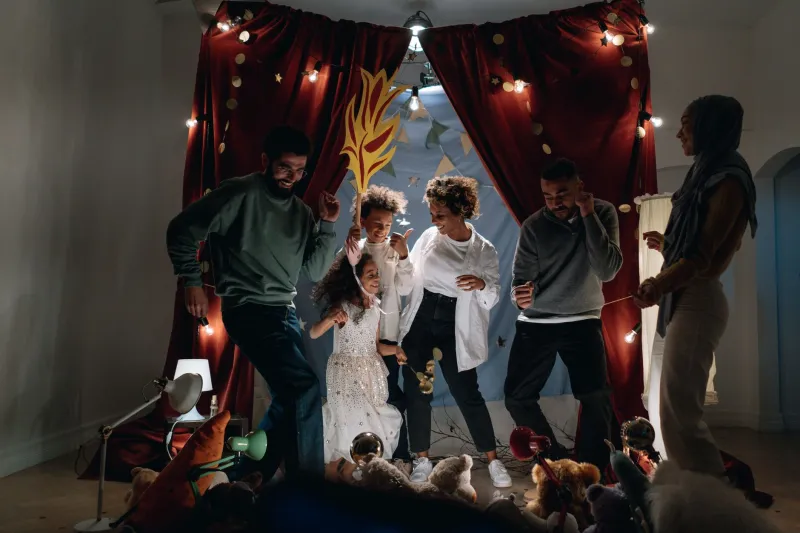
Not every family is doing this consciously or dramatically. Sometimes the evolution is subtle — a Diwali that slowly incorporates a gift exchange alongside the diyas, a Rakhi that now includes sisters tying threads on brothers' wrists and brothers doing the same in return, a coming-of-age birthday that borrows the spirit of a quinceañera or a bar mitzvah because those frameworks suddenly make sense for what the family wants to say.
What's consistent across all of it is the impulse: to mark time, to say this matters, to give the next generation something to hold onto.
Maya Pillai, a third-generation Tamil American in Atlanta, puts it simply. "My grandparents had their rituals. My parents had a watered-down version of those rituals. I don't want to water it down further — but I also don't want to perform something that doesn't feel real. So I'm building something new that's still connected to the old. I don't have a name for what it is yet. Maybe that's okay. Maybe the naming ceremony never really ends."
Why This Matters Beyond the Family
There's something bigger happening here than just individual families making creative choices at milestone events. These evolving ceremonies are doing the cultural work that institutions often can't — they're transmitting values, building belonging, and insisting that South Asian identity in America is not a fixed point but a living, breathing, growing thing.
At PrabhuGhar, we talk a lot about how Indian cinema and music carry culture across borders. But the living room ceremonies, the bilingual blessings, the tiffin boxes passed across generations — these are their own kind of storytelling. They don't need a screen. They just need people who care enough to show up, and to keep asking: What does this mean for us, here, now?
The answer keeps changing. That's not a problem. That's the whole point.